A laundromat is a shared room full of machines on timers, which means your laundry day runs on other people's courtesy and theirs runs on yours. The rules are unwritten but consistent, and most friction comes from timing, not malice: a finished load sitting in a washer while its owner is at lunch, a dryer claimed by clothes nobody returns for. In Rock Hill the room also has seasons. Knowing both the rules and the rhythm makes the whole trip faster.
Start with timing, because half of etiquette is simply not needing a machine someone else is waiting for.
When the room is busy, and when it is not
Weekend mornings are peak time in almost every laundromat, when the week's laundry and the bulky bedding all arrive at once. Weekday mid-mornings and early afternoons are the quiet windows. Evenings sit in between. The seasons shift the pattern too. Spring pollen season sends bedding and blankets in for heavy washing. Summer adds swimsuits, towels, and sports gear, plus a midday rush from people avoiding home dryers heating the house. Fall brings back-to-school loads and, later, guest bedding before the holidays. Winter is the steadiest season, with weather as the wildcard: a rainy Saturday packs the dryers even when the washers have room.
The practical move is to match your load to the room. Bulky items that monopolize the big machines go best in a quiet window. A quick weekly load can survive a busier hour because it turns over fast.

The shared-room checklist
- Set a phone timer for a few minutes before your cycle ends, and be in the room when it does
- Move a finished load promptly; if every machine is taken and a load has sat finished well past its cycle, moving it gently to a cart is the accepted norm
- Use only the machines you can load now, not the row you plan to grow into
- Clean the lint trap after your dryer load; it takes five seconds and the next person's clothes dry faster for it
- Measure detergent instead of pouring freehand, since leftover suds become the next load's problem
- Keep folding-table time reasonable at peak hours, and fold bulky bedding at home if the tables are full
- Watch your own laundry, not the room: unattended loads are a risk you accept, not a duty you assign strangers
The unattended load, handled honestly
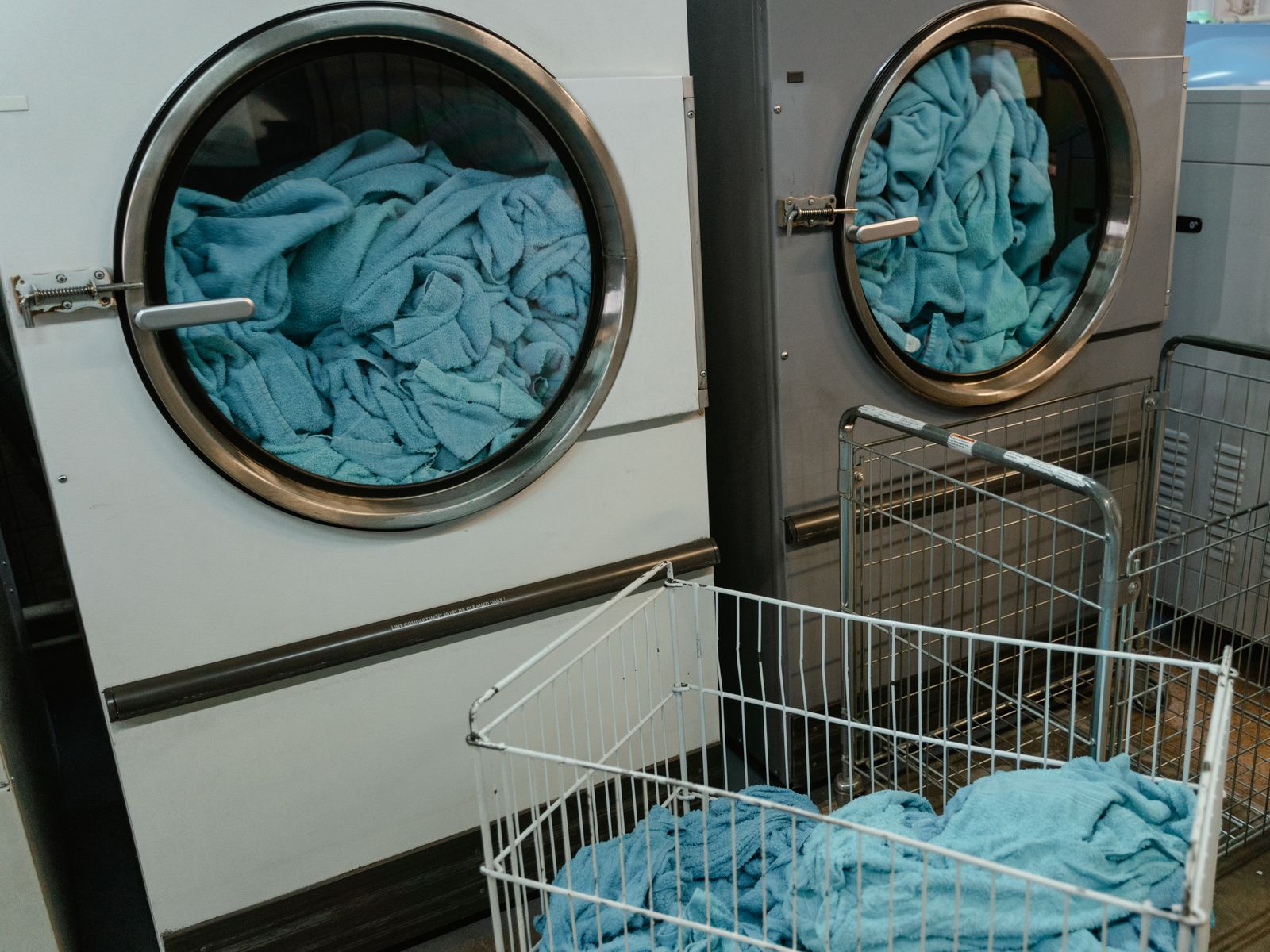
Leaving during a wash cycle is normal. Laundry takes time, and a quick errand is part of the routine. The line is the dryer and the finished load. A washer that ended twenty minutes ago with a line of people waiting is the one genuine etiquette violation in the building, because it converts your errand into everyone else's delay. If you must leave, leave your number on the machine or tell the attendant, and keep the trip shorter than the cycle. From the other side, if you move someone's finished load, move it whole, to a clean cart or table, and never to the floor. The norm works because both halves hold.
Small courtesies that compound
Wipe up your detergent spill, because the next person sets a basket in it. Leave the washer door as you found it, and check the drum behind you for the sock that always tries to stay. Keep kids close; the room is full of hot machines, carts with momentum, and strangers' clean laundry. And if a machine eats your cycle or stops mid-wash, tell the attendant rather than abandoning a drum of wet clothes, since a shop like Fast Pace Coin-Op Laundry can restart or move the load, and an abandoned drum blocks the machine twice as long. None of this is complicated. It is the same principle as a shared kitchen, applied to machines with countdown clocks. The regulars in any laundry room follow these rules without thinking about them, and their laundry days are visibly shorter and calmer for it.
Common questions
How long can I leave my laundry unattended?
Through a wash cycle is normal, provided you are back when it ends. Leaving finished loads sitting in machines during busy hours is the part that breaks the shared system.
Someone's finished load is in the only free washer. What do I do?
Give it a few minutes first, and ask the attendant if there is one. If it has clearly been sitting, moving it gently and whole into a cart is the accepted practice in most laundromats.
What is the single best time to do bulky laundry?
A weekday mid-morning, when the large machines and dryers are most likely to be free in a row. Weekend mornings are when everyone else has the same idea.
Photos in this guide are representative stock images.
← All guides from Fast Pace Coin-Op Laundry← Back to Fast Pace Coin-Op Laundry